

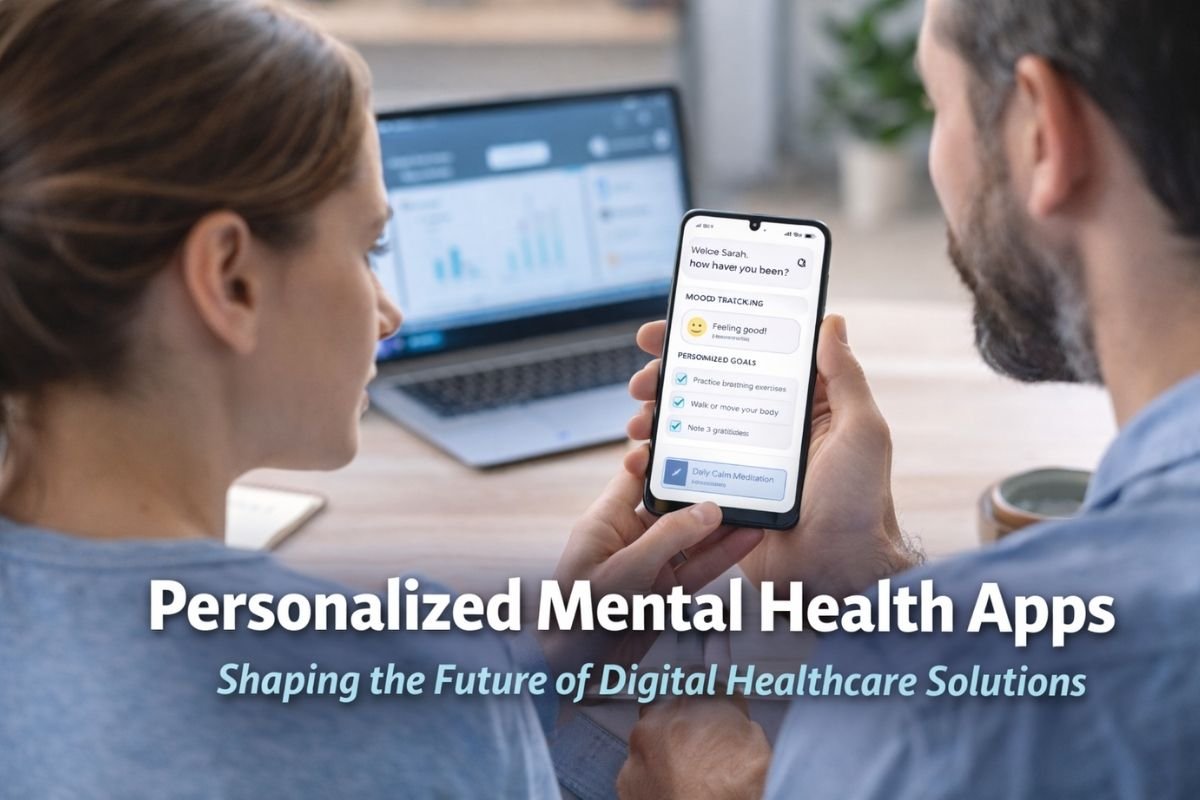
The mental health app market reached $4.2 billion in 2023 and accelerates toward $11.7 billion by 2030. Patients increasingly demand solutions that adapt to their unique circumstances rather than delivering standardized interventions.
Organizations building effective mental health apps recognize that technology alone delivers minimal value without thoughtful design and clinical rigor. Healthcare organizations invest heavily in digital mental health, yet many platforms struggle to maintain engagement. The issue rarely stems from clinical gaps.
It stems from static design that fails to translate personalization into meaningful user experiences. B2B decision-makers evaluate mental health platforms through real-world outcomes, not algorithm sophistication.
When interfaces confuse patients or workflows disrupt clinical integration, adoption stalls regardless of technical rigor. For healthcare leaders, user experience now directly influences ROI on digital mental health investments.
The Engagement Crisis: Why Static Apps Fail
Patient engagement collapsed across first-generation mental health applications. Research shows 95% of health app users abandon platforms within the first year.
Users downloaded apps enthusiastically, completed initial assessments, then disappeared. The core problem: static platforms deliver generic content without adapting to individual needs.
A user receives identical recommendations regardless of their unique challenges, progress, or preferences. This one-size-fits-all approach feels impersonal and irrelevant.
Contextualized, adaptive platforms reverse this dynamic. They recognize individual patterns, adjust intervention timing, and evolve alongside patient progress.
Research shows personalized mental health applications achieve 60-70% engagement retention after 90 days, compared to 15-20% for non-personalized platforms. This difference translates directly to better clinical outcomes.
Why Personalization Matters
Static apps deliver content in fixed formats. Personalized platforms deliver intelligence adapted to real user needs.
First, platforms tailor intervention difficulty based on individual readiness. Someone early in treatment receives foundational techniques, while others explore advanced approaches.
Second, systems adjust intervention frequency based on risk level and engagement. High-risk individuals receive frequent check-ins, while others benefit from less intensive monitoring.
Third, platforms incorporate individual preferences regarding content modality. Some users engage better with guided audio, while others prefer text-based reflections or interactive exercises.
A 2023 JAMA Psychiatry study demonstrated adaptive interventions produce 34% better outcomes than standard protocols for depression. This evidence foundation strengthens the case for personalization.
Architecture and User Experience Integration
Personalized mental health platforms require specific technical capabilities. They must process real-time user data, execute recommendation algorithms, and maintain strict security standards simultaneously.
Modern platforms process sensitive information locally on user devices rather than exclusively cloud-based. This preserves privacy while improving models based on aggregate patterns.
Strong user experience translates personalization into measurable value. When interfaces confuse patients, adoption drops regardless of algorithm sophistication.
UX design structures intelligence into usable workflows. It defines how patients discover insights, act on recommendations, and recover from setbacks.
User experience also builds trust in AI-driven recommendations. Patients want clarity about how systems suggest interventions and what limitations exist.
When data limitations appear, UX design absorbs technical constraints and communicates them honestly. Transparent interfaces create confidence in digital tools.
Clinical Integration and Data Privacy
Successful platforms integrate meaningfully with existing clinical workflows rather than operating as isolated applications.
A therapist using standard practice management software benefits from accessing app data within existing tools. This integration reduces friction and increases clinician adoption.
Integration enables therapists to adjust algorithm parameters and monitor patient engagement within standard systems. Digital therapeutics and therapist-delivered care reinforce each other.
Mental health applications collect exceptionally sensitive personal information. Protecting this data with exceptional rigor becomes both an ethical obligation and competitive necessity.
Modern platforms implement end-to-end encryption, careful data minimization, regular security audits, and rapid vulnerability response. Transparent data practices build user trust.
Organizations serious about trust minimize data retention. They keep only what’s necessary for current service delivery. Some implement automatic deletion policies removing historical information after specified periods.
Strategic Development Approaches
Healthcare organizations launching personalized mental health applications choose among distinct development strategies. Each involves different timelines, resources, and risk profiles.
Custom solutions provide maximum control and strategic alignment. However, they require significant technical expertise, extended timelines (12-18 months), and substantial ongoing costs.
Specialized healthcare app developers accelerate timelines while ensuring clinical and technical rigor. This partnership approach typically launches platforms 6-9 months faster.
When evaluating healthcare app development partners, assess their experience with personalized platforms specifically. Ask about clinical validation approaches and healthcare compliance expertise.
Organizations understand how potential partners approach personalization, clinical rigor, and regulatory compliance. Reviewing case studies demonstrating measurable engagement and clinical outcomes proves capability beyond technical features.
Measuring Impact
Mental health platforms generate multiple meaningful data categories. Beyond user engagement metrics, organizations track clinical outcomes determining true value.
Clinical outcomes include symptom improvement through validated assessment tools like PHQ-9 for depression or GAD-7 for anxiety. Applications enable regular assessment and track changes over time.
Operational metrics interest healthcare providers and payers. These include emergency department utilization changes, hospitalization rates, and healthcare cost trends.
When mental health app users demonstrate reduced emergency service utilization, these operational benefits justify investment. Organizations serious about demonstrating value invest in measurement frameworks before launch.
5 Leading Digital Healthcare Solution Companies in the USA
1. GeekyAnts
GeekyAnts is a global technology consulting firm specializing in digital transformation, end-to-end app development, digital product design, and custom software solutions. The company builds personalized digital healthcare applications combining clinical rigor with advanced personalization architecture. Their expertise spans mental health platform development with particular strength in adaptive interventions improving engagement and clinical outcomes.
GeekyAnts integrates clinical advisors throughout development, ensuring applications reflect evidence-based design principles. They understand healthcare compliance requirements and FDA regulatory pathways.
Clutch Rating: 4.9/5 (111 verified reviews)
Address: 315 Montgomery Street, 9th & 10th floors, San Francisco, CA 94104, USA
Phone: +1 845 534 6825 | Email: info@geekyants.com | Website: www.geekyants.com
2. Simform
Simform specializes in custom software development with particular strength in healthcare platforms and enterprise-scale solutions. Their expertise spans AI development, cloud consulting, and healthcare system integration.
They consistently deliver healthcare solutions with 88% of reviewers praising technical expertise and project management. Simform focuses on building scalable, compliant platforms that integrate seamlessly with existing healthcare infrastructure.
Clutch Rating: 4.8/5 (82 verified reviews)
Address: 101 Enterprise Drive, Suite 100, Princeton, NJ 08540, USA Phone: +1 609 734 8000
3. Vention
Vention delivers end-to-end custom software development with proven expertise in healthcare solutions. Their team combines responsive project management with high-quality engineering, particularly valuable for digital health platforms requiring reliability and compliance.
They maintain 100% client satisfaction regarding responsiveness and 90% highlight strong developer talent. Vention excels at understanding healthcare workflows and translating clinical requirements into functional platforms.
Clutch Rating: 4.9/5 (98 verified reviews)
Address: 123 Front Street, Toronto, ON, Canada Phone: +1 647 729 8000
4. Coherent Solutions
Coherent Solutions develops custom software for healthcare and enterprise sectors. Their 100% positive feedback reflects strong technical expertise and ability to transform struggling digital health products into successful platforms.
They excel at healthcare compliance, cloud-native architecture, and end-to-end solutions. Coherent Solutions combines direct communication, honest feedback, and timely delivery, making them reliable partners for complex mental health platform development.
Clutch Rating: 4.7/5 (30 verified reviews)
Address: 1111 3rd Ave, Suite 800, Seattle, WA 98101, USA Phone: +1 206 389 4300
5. WeSoftYou
WeSoftYou specializes in custom software development with 100% client satisfaction. Their expertise spans AI-powered healthcare solutions and full-stack development for medical platforms.
Their transparent communication, efficient project management, and user-centric approach make them excellent for personalized mental health app development. Clients consistently praise their ability to deliver innovative solutions on time and within budget.
Clutch Rating: 4.9/5 (30 verified reviews)
Address: 1000 Brickell Ave, Suite 900, Miami, FL 33131, USA Phone: +1 305 600 8000
Conclusion
Personalized mental health applications represent a fundamental evolution in how digital technology supports psychological wellbeing. The transition from static content to contextual, adaptive platforms creates meaningful improvements in engagement and clinical outcomes.
Healthcare leaders who recognize this shift gain competitive advantages addressing population mental health challenges. Success requires deliberate attention to clinical validation, secure architecture, and clinical workflow integration.
Static tools become obsolete. Platforms combining intelligent personalization with clinical oversight emerge as market leaders. Whether building internally or partnering with specialized developers, healthcare organizations prioritizing this evolution position themselves to improve mental health outcomes meaningfully while building sustainable digital health businesses.

