

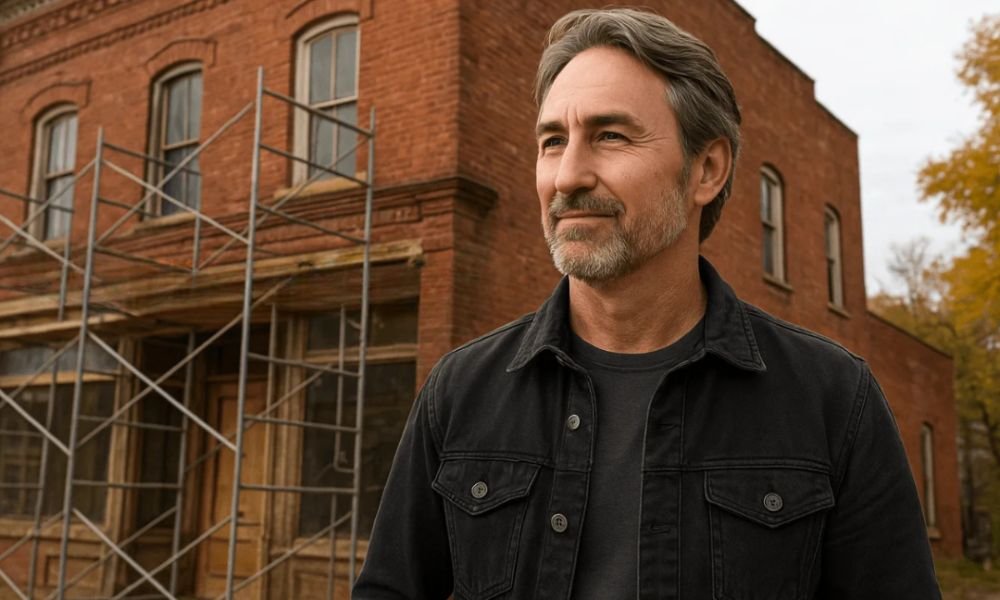
When most people think of Mike Wolfe, they picture the charismatic host of American Pickers, scouring backroads and barns for hidden treasures. But beyond the television cameras and antique shops lies something far more profound—a lifelong passion project dedicated to preserving America’s forgotten stories, one relic at a time.
The Roots of Mike Wolfe’s Passion Project
Mike Wolfe’s journey into preservation began long before American Pickers became a household name. Growing up in Bettendorf, Iowa, his childhood was marked by an insatiable curiosity about the artifacts left behind in small-town America. At just four years old, Wolfe discovered an abandoned bicycle in a neighbor’s trash—a moment that would spark a collecting journey spanning decades.
His roots in the rural landscapes of Iowa shaped his understanding of America’s cultural heritage. The barns, gas pumps, and signs dotting the backroads of his youth weren’t just relics—they were storytelling vessels carrying the identity of entire communities. This early exposure to vintage items and the history they represented became the foundation of his mission to preserve the past for future generations.
| Early Influence | Impact on Passion Project |
| Childhood collecting | Developed eye for artifacts with cultural value |
| Small-town upbringing | Understanding of rural America’s heritage |
| Limited resources | Appreciation for repurposed and handmade goods |
Wolfe’s collecting wasn’t merely about acquisition—it was about understanding the legacy of American makers and craftspeople who built this nation with their hands. Each treasure he discovered told a story of craftsmanship, tradition, and the spirit of a bygone era.
From TV Star to Preservationist: More Than American Pickers
The launch of American Pickers in 2010 transformed Mike Wolfe from a passionate collector into a cultural preservationist with a platform. While the show brought him media fame, Wolfe quickly recognized an opportunity to turn his passion into a real-world mission that extended far beyond television entertainment.
The Evolution of Purpose
What started as documenting picking adventures evolved into a movement dedicated to:
- Highlighting the importance of preservation in small-town communities
- Educating viewers about America’s industrial and architectural heritage
- Supporting local economy through tourism and cultural revitalization
- Championing makers, artists, and craftspeople keeping tradition alive
Wolfe’s influence through American Pickers created awareness about artifacts that might otherwise be lost to rust, dust, and time. Each episode became a lesson in history, showcasing everything from vintage motorcycles to antique furniture, from repurposed metalwork to handmade leather goods.
The show’s success demonstrated that America hungered for connection to its collective memory—proof that preservation matters not just to historians and collectors, but to anyone seeking to understand their cultural identity.
Antique Archaeology: Where the Passion Project Comes to Life
Mike Wolfe’s vision found physical form in Antique Archaeology, with locations in LeClaire, Iowa, and Nashville, Tennessee. These aren’t merely shops—they’re community hubs where preservation meets public engagement.
LeClaire: Honoring the Roots
The original Iowa location sits in Wolfe’s home state, serving as a museum-like space where visitors can experience the artifacts he’s collected over decades. The store displays relics ranging from vintage bikes to industrial tools, each carefully curated to tell America’s story.
Nashville: Expanding the Mission
The Tennessee location in downtown Nashville brought Wolfe’s passion project to a broader audience. Situated in Columbia, the Nashville shop became a destination for those interested in Americana, design, and the cultural heritage of the American South.
Both locations serve multiple purposes:
- Marketplace: Offering handmade goods, repurposed furniture, and vintage treasures
- Museum: Exhibits showcasing America’s industrial past and craftsmanship
- Workspace: Restoration projects bringing artifacts back to life
- Community Center: Events and public speaking opportunities for education
- Tourism Hub: Driving economic revival in their respective towns
The shops embody Wolfe’s belief that preservation isn’t about locking history away—it’s about making it accessible, tangible, and relevant to contemporary life.
Restoration Projects That Tell America’s Forgotten Stories
Perhaps the most tangible expression of Mike Wolfe’s passion lies in his restoration work on historic buildings throughout small-town America. These projects demonstrate his commitment to architectural preservation and downtown revitalization.
Historic Buildings Brought Back to Life
Wolfe has invested in numerous restoration projects, particularly in Iowa and Tennessee, focusing on structures that others deemed too far gone. Each building represents not just bricks and mortar, but the collective history of the community it served.
His approach to restoration balances preservation authenticity with creative adaptation for modern use. Whether it’s a former industrial facility or a forgotten storefront, Wolfe sees potential where others see only decay.
Impact of Building Restoration:
| Community Benefit | Long-term Effect |
| Tourism increase | Economic growth for local businesses |
| Cultural identity preservation | Stronger sense of place and legacy |
| Skilled craftspeople employment | Revival of traditional woodcraft and metalwork |
| Architectural heritage protection | Maintained visual character of small towns |
These restoration projects also serve as training grounds, preserving the knowledge of craftspeople skilled in traditional techniques—denim workers, furniture makers, and artisans whose heritage might otherwise disappear.
“Two Lanes”: Wolfe’s Visual Journal of Americana
Mike Wolfe’s passion for storytelling extends beyond picking and restoration into the realm of photography and writing. His book “Two Lanes” serves as a visual journal documenting America’s backroads culture—a travelogue celebrating the spirit and freedom found off the interstate.
More Than a Coffee Table Book
“Two Lanes” isn’t just photography—it’s a blog in book form, combining images with Wolfe’s personal reflections on:
- The symbolic importance of America’s roads as arteries of culture
- Gas pumps and roadside signs as artifacts of travel heritage
- Small-town identity preserved in rural landscapes
- The rebellion against homogenization and corporate uniformity
The book represents Wolfe’s belief that America’s authentic character lives not in major cities but in the towns scattered across rural landscapes. His photography captures the dust, rust, and patina that tells more honest stories than any freshly painted facade.
Through “Two Lanes,” Wolfe created a brand that goes beyond his television persona—positioning himself as a documentarian of Americana, a role that aligns perfectly with his mission of preservation through digital media and traditional publishing.
Motorcycles: A Lifelong Passion Turned Cultural Purpose
Among all the artifacts Mike Wolfe collects, vintage motorcycles hold special significance. His passion for bikes isn’t merely about mechanical appreciation—it’s about understanding their symbolic role in American culture.
The Freedom Machine
Motorcycles represent:
- Spirit of rebellion: Against conformity and conventional paths
- Freedom: The open road and self-determination
- Craftsmanship: Engineering excellence and design innovation
- Cultural identity: From racing roots to countercultural movements
Wolfe’s collection of vintage bikes spans decades of American motorcycle history, with particular attention to brands that defined eras and movements. Each motorcycle in his collection tells a story about America’s relationship with freedom, innovation, and the open road.
His motorcycle passion contributes to preservation by:
- Maintaining rare bikes that might otherwise be lost
- Supporting restoration craftspeople specializing in vintage motorcycle work
- Educating collectors about the cultural heritage of American motorcycle manufacturing
- Showcasing bikes in displays that contextualize their historical importance
The intersection of motorcycles and Wolfe’s broader mission demonstrates how passion can serve purpose—personal interest fueling cultural preservation.
Supporting American Makers & Heritage Craftsmanship
At the heart of Mike Wolfe’s passion project lies unwavering support for American makers, artists, and craftspeople. His mission explicitly champions those preserving traditional methods in an age of mass production.
Champion of Small Businesses
Through Antique Archaeology and his broader platform, Wolfe actively promotes:
- Handmade goods: Leather workers, furniture craftspeople, metalwork artists
- Traditional techniques: Woodcraft, denim manufacturing, repurposed design
- Local economy: Supporting small businesses in rural and small-town America
- Marketplace access: Giving makers visibility they couldn’t achieve independently
Wolfe’s shops feature goods from artists and craftspeople across America, providing them with a marketplace that values quality over quantity, tradition over trend.
Preservation Through Commerce
His approach recognizes that preservation requires economic viability. By creating demand for handmade, heritage goods, Wolfe ensures that:
- Traditional craftsmanship remains economically sustainable
- Younger generations see value in learning historic techniques
- Small businesses can compete against mass-produced alternatives
- Communities maintain their creative identity and legacy
This aspect of his passion project demonstrates understanding that preservation isn’t just about saving old things—it’s about keeping traditions alive through continued practice and innovation.
Inspiring Preservation in Small-Town America
Mike Wolfe’s influence extends beyond his immediate projects into broader community revitalization efforts. His work has inspired countless small towns to reconsider their own heritage and the value of preservation.
Community Revival Through Cultural Tourism
Wolfe’s model demonstrates how historic preservation can drive economic revival:
Economic Impact Cycle:
- Restoration of buildings draws attention to downtown areas
- Tourism increases as people seek authentic Americana experiences
- Local economy strengthens through visitor spending
- Small businesses find sustainable markets
- Community pride and identity are reinforced
- Further preservation becomes economically justified
His presence in LeClaire and Nashville illustrates this cycle in action. Both towns have experienced increased tourism directly attributable to Antique Archaeology locations, with ripple effects benefiting surrounding small businesses.
Educational Mission
Through public speaking, events, and community projects, Wolfe has become an advocate for preservation, teaching others about:
- The importance of architectural heritage to cultural identity
- How preservation drives tourism and economic opportunity
- Techniques for restoration that honor original craftsmanship
- The role of collective memory in shaping future values
His work with nonprofits and preservationists has created networks of people committed to saving America’s small-town heritage. This collaborative approach multiplies impact beyond what any individual could achieve.
Changing Perspectives on Rural America
Perhaps most significantly, Wolfe’s passion project has shifted how America views its rural towns. Rather than seeing them as relics of a dying past, his work frames them as repositories of cultural heritage worthy of preservation and celebration.
Using Modern Media to Share the Past with the Future
Mike Wolfe understands that effective preservation in the 21st century requires embracing digital media alongside traditional methods. His use of social media, blogging, and digital storytelling brings history to audiences who might never visit an antique shop or historic building.
Digital Preservation Strategy
Wolfe’s media presence includes:
- Instagram: Visual storytelling showcasing artifacts, buildings, and restoration projects
- Facebook: Community engagement and event promotion
- YouTube: Video content documenting picking adventures and restoration work
- Blogging: Written reflections on preservation, history, and cultural heritage
- Social media: Behind-the-scenes content humanizing the preservation mission
This digital strategy serves multiple purposes. It educates audiences about the importance of preservation, creates demand for heritage goods and experiences, documents artifacts and buildings for posterity, and inspires others to engage with their own local history.
Storytelling as Preservation
Wolfe recognizes that objects without context are mere things—it’s the stories that give artifacts meaning. His emphasis on storytelling, whether through American Pickers, “Two Lanes,” or social media, ensures that:
- The cultural identity embedded in artifacts is communicated
- Future generations understand the legacy they inherit
- Collective memory is maintained even as physical objects age
- The values of makers and craftspeople are honored
By using modern media to share the past, Wolfe bridges generations, making history relevant to young people raised in a digital age. This approach ensures that preservation isn’t seen as backward-looking nostalgia but as essential to understanding who we are and where we’re going.
Building a Movement
Through consistent digital engagement, Wolfe has built a community of preservation advocates. His influence extends beyond passive viewership—followers become active participants in preservation, whether by:
- Supporting local small businesses and makers
- Engaging in community projects to save historic buildings
- Collecting and preserving artifacts in their own communities
- Advocating for preservation policies and funding
This demonstrates that media isn’t just about broadcasting—it’s about creating a movement united by shared values and purpose.
The Bigger Picture: Mike Wolfe’s Legacy Beyond Collecting
When we step back and examine Mike Wolfe’s body of work, we see something far more significant than a successful television show or profitable antique business. We see a cohesive mission to preserve American cultural heritage through multiple, reinforcing approaches.
A Holistic Preservation Philosophy
Wolfe’s passion project encompasses:
- Physical preservation: Restoring buildings and artifacts
- Economic preservation: Supporting makers, artists, and small-town economies
- Cultural preservation: Maintaining traditions, craftsmanship, and identity
- Educational preservation: Teaching future generations about heritage
- Digital preservation: Documenting history through modern media
This comprehensive approach recognizes that true preservation requires attention to multiple dimensions. Saving a building means nothing if the community around it dies; preserving craftsmanship techniques fails if no market exists for the goods produced.
Inspiring the Next Generation of Preservationists
Perhaps Wolfe’s greatest legacy will be the inspiration he provides to others. His work demonstrates that:
- One person’s passion can catalyze broader cultural change
- Preservation can be economically viable, even profitable
- History and heritage remain relevant in contemporary life
- Small actions—saving one building, supporting one maker—accumulate into significant impact
The Long-term Vision
Looking toward the future, Wolfe’s mission continues expanding. Each restoration project, each maker supported, each story shared contributes to a larger vision: an America that values its past, preserves its heritage, and maintains connection to the collective history that shapes our cultural identity.
His work proves that preservation isn’t about living in the past—it’s about ensuring that the values, craftsmanship, and stories of previous generations inform and enrich our future.
Frequently Asked Questions
Q: What inspired Mike Wolfe to start his preservation work?
A: His childhood in Iowa, where he discovered artifacts in barns and backroads, sparked his lifelong passion for collecting and preservation.
Q: How does Antique Archaeology support local communities?
A: The shops drive tourism, support local makers and small businesses, and serve as educational hubs about cultural heritage.
Q: What is “Two Lanes” about?
A: It’s Mike Wolfe’s visual journal and travelogue documenting America’s backroads culture through photography and storytelling.
Q: Why does Mike Wolfe focus on small-town America?
A: He believes small towns preserve authentic American identity, heritage, and the collective memory that shaped our nation.
Q: How does Mike Wolfe use social media for preservation?
A: He shares stories, educates followers about cultural heritage, documents artifacts digitally, and builds a community committed to preservation.

