

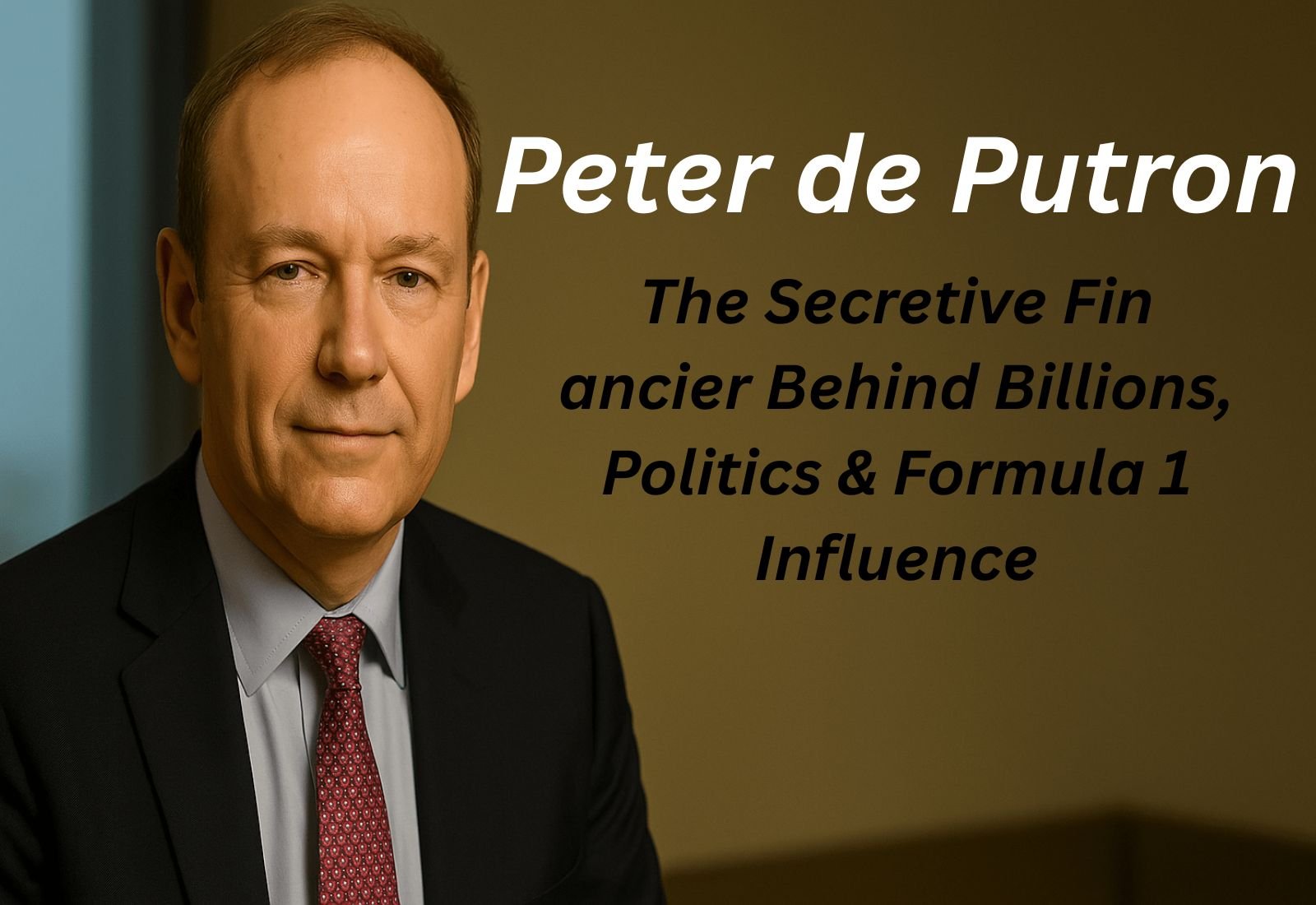
In the world of high finance and political influence, few figures remain as enigmatic as Peter de Putron. While billionaire financiers often court public attention, this British investor has built an empire that operates largely in the shadows. His public image is nearly nonexistent, yet his private persona commands significant power across multiple sectors.
Known among industry insiders as a shadow power broker, de Putron has masterfully cultivated a reputation for discretion while wielding considerable influence in finance, politics, and even motorsport. His approach to wealth management and strategic investment has made him a key player in shaping modern capitalism, yet most people have never heard his name.
His sphere of influence spans three primary areas: hedge funds and quantitative trading through firms like G-Research, conservative political movements across the United Kingdom and Europe, and the high-profile world of Formula 1 racing through connections with Williams Racing. This unique combination of interests reveals a man who understands that true power often operates behind a veil of confidentiality.
Early Life and Education
Peter de Putron’s background reflects the aristocratic heritage and elite schooling that has historically shaped British financial dynasties. Born into a family with ties to the Channel Islands, his early life was marked by privilege and access to opportunities that would later define his career trajectory.
His academic journey took him through some of Britain’s most prestigious institutions. After attending Eton, one of the most exclusive private schools in the world, he continued his education at Oxford, where he studied mathematics. This foundation in analytical thinking and computational science would prove instrumental in his later success with algorithmic trading and data-driven investment strategy.
The Channel Islands connection, particularly to Guernsey and Jersey, would become significant throughout his professional life. These jurisdictions, known for their favorable regulatory framework and tax structures, would later house many of his financial operations. Even during his university years at Oxford, there were hints of his future direction—an interest in quantitative analysis, predictive modeling, and the intersection of technology and finance.
His early interests demonstrated a keen awareness of how computational power could reshape traditional investment approaches. Unlike many of his peers who pursued conventional banking careers in London, de Putron recognized the potential of technology-driven finance long before it became mainstream.
Career Beginnings and Rise in Finance
Peter de Putron’s entry into financial markets came at a time when the industry was undergoing significant transformation. Rather than following the traditional path through major institutional banks, he recognized an opportunity to build something different—a firm that combined mathematical precision with discretion and conservative risk management.
The founding of De Putron Fund Management marked his first major step toward building a financial empire. The firm was established with a clear philosophy: deliver consistent returns through disciplined analysis while maintaining absolute confidentiality for investors. This approach attracted high-net-worth individuals and family offices who valued privacy as much as performance.
His early investment strategies focused on identifying market inefficiencies through rigorous research and quantitative methods. Unlike the aggressive hedge fund managers who dominated headlines, de Putron built his reputation on calculated decisions and long-term planning. His clients appreciated the absence of flashy media outreach or public testimony about his successes.
The firm’s operational structure reflected his commitment to remaining discreet. Limited public filings, minimal press coverage, and a culture of silence among employees became hallmarks of his management style. This confidential approach to business operations would become a defining characteristic throughout his career.
By focusing on steady, risk-adjusted returns rather than spectacular gains, de Putron established a foundation of trust with institutional investors and wealthy families seeking stability over volatility. His reputation for precision and reliability grew quietly but steadily within elite financial circles.
The Rise of G-Research – The Secretive Tech-Driven Firm
While De Putron Fund Management established his credentials, his connection to G-Research represents perhaps his most significant impact on modern finance. G-Research emerged as one of Europe’s leading quantitative trading firms, pioneering the use of advanced algorithms and artificial intelligence in investment decisions.
The foundation of G-Research was built on a revolutionary concept: that systematic, data-driven analysis could consistently outperform human intuition in financial markets. The firm recruited top talent from academia, including mathematicians, physicists, and computer science experts, creating an environment where intellectual capital was the primary asset.
G-Research’s role in algorithmic trading and high-frequency operations transformed how sophisticated investors approached markets. By processing vast amounts of data through proprietary software and predictive models, the firm could identify patterns and execute trades with speed and precision impossible for traditional managers.
The connection between de Putron and G-Research, while not always publicly transparent, reflects his strategic vision for the future of finance. His understanding of how technology and data could reshape investment strategy positioned him at the forefront of the quant revolution sweeping through global markets.
The architecture of G-Research embodies principles of operational efficiency and innovation that de Putron championed throughout his career. The firm’s success in generating consistent profit growth, even during periods of market instability, demonstrates the strength of technology-driven approaches when combined with disciplined risk frameworks.
This integration of advanced computation, artificial intelligence, and traditional financial expertise created a new paradigm in asset management. The firm’s ability to maintain its competitive edge while operating with minimal public exposure exemplifies de Putron’s broader philosophy about power and visibility.
Bell Rock Capital Management and Global Investments
Expanding beyond his earlier ventures, Peter de Putron’s involvement with Bell Rock Capital Management demonstrates his ability to build transnational networks of capital and influence. Bell Rock represents a sophisticated approach to global investment, with operations spanning multiple jurisdictions and asset classes.
The firm’s global investment approach reflects lessons learned from decades in financial markets. By establishing partnerships across continents and diversifying into equities, commodities, and derivatives, Bell Rock positioned itself to capitalize on opportunities regardless of regional economic conditions.
De Putron’s financial vision played a crucial role in Bell Rock’s expansion strategy. His emphasis on diversification, careful asset allocation, and long-term value creation guided the firm’s evolution from a focused investment vehicle to a broad-based portfolio manager serving elite clients worldwide.
The firm’s influence in international markets extends beyond simple capital deployment. Through strategic investments and careful relationship building, Bell Rock has established connections with major institutional players, creating a network effect that amplifies its impact across the global financial ecosystem.
Bell Rock’s structure, like de Putron’s other ventures, prioritizes confidentiality and discretion. The use of offshore entities and multi-jurisdictional frameworks allows for operational flexibility while maintaining privacy for investors. This approach, while perfectly legal, has occasionally drawn scrutiny regarding transparency and oversight.
The firm’s success in navigating complex cross-border regulations and building a truly international presence speaks to de Putron’s understanding of modern global finance. His ability to leverage connections across regulatory environments has been instrumental in building sustainable competitive advantages.
Political Connections and Influence
Beyond his financial operations, Peter de Putron has emerged as a significant figure in conservative politics through substantial donations and behind-the-scenes influence. His political engagement, while discreet, has shaped policy debates and supported movements aligned with his worldview.
Records show that de Putron has been a major donor to conservative parties in the United Kingdom and across Europe. These contributions have supported candidates and causes that favor free-market economics, limited regulatory interference, and policies favorable to financial services industries.
His influence via donations and networks extends beyond simple campaign contributions. By funding policy research, supporting advocacy organizations, and building relationships with key decision-makers, he has helped shape the broader political ecosystem in ways that align with his business interests and ideological preferences.
The scale of his political contributions has occasionally sparked debate about the role of wealthy financiers in democratic processes. Critics point to the potential for large donors to exercise disproportionate influence over policy outcomes, particularly in areas like financial regulation and taxation frameworks.
Despite this influence, de Putron has maintained his characteristic low profile. Unlike other major donors who use their contributions to build public profiles, he has avoided publicity, allowing his financial support to speak for itself while remaining largely invisible to the general public.
His pro-Brexit stance and support for the Leave campaign during the UK’s referendum on European Union membership demonstrated his willingness to engage on major national issues. This involvement, while significant, was conducted with minimal personal exposure, channeling support through organizations rather than personal appearances.
Family Ties to Politics
The relationship between Peter de Putron and Priti Patel, a prominent UK politician who has served in various cabinet positions, adds another dimension to his political connections. While the exact nature of their familial ties has been the subject of media speculation, the connection has drawn attention to how personal relationships can intersect with political influence.
Priti Patel’s career, which has included roles focused on international development and home affairs, has occasionally faced questions about potential conflicts of interest related to wealthy donors and their networks. The association with de Putron, given his significant political donations, has fueled scrutiny over whether personal relationships affect policy decisions or access to government circles.
Media coverage of this connection has varied widely, with investigative journalism attempting to map the full extent of these ties and their potential impact. However, the limited public information available makes definitive conclusions difficult, a situation that reflects de Putron’s broader success in maintaining privacy.
The impact of familial and personal connections on public perception cuts both ways. For some, these relationships represent legitimate networking within political and business communities. For others, they exemplify concerns about a closed club of elite donors and policymakers who operate outside public accountability.
This scrutiny has intensified during periods when Patel has faced other controversies, with journalists attempting to establish whether donors like de Putron receive favorable treatment or enhanced access to Westminster decision-making processes. The opacity surrounding these relationships only amplifies such concerns.
Peter de Putron and Formula One
Perhaps one of the most unexpected aspects of Peter de Putron’s portfolio is his connection with Williams Racing and the broader world of Formula 1. This involvement represents a fascinating intersection of sport, finance, and global branding that reveals his understanding of influence beyond traditional capital markets.
Through entities including Dorilton Capital, there are ties connecting de Putron’s financial interests to the acquisition and sponsorship of Williams Racing, one of F1’s historic teams. The business motivations behind involvement in motorsport extend beyond mere passion for racing—Formula 1 offers unique opportunities for global brand exposure, networking among international elites, and potential returns through the sport’s growing commercial success.
His influence and behind-the-scenes financial role in motorsport demonstrates how modern sporting enterprises have become vehicles for capital deployment and image management. F1 teams now operate as sophisticated business platforms that attract institutional investment, and figures like de Putron recognize the strategic value of such assets.
The decision to back Williams Racing through connected investment vehicles reflects careful calculation about long-term value. As Formula 1 has expanded its global reach, particularly in emerging markets, team ownership has become increasingly attractive to investors seeking both financial returns and reputational benefits.
De Putron’s characteristic discretion extends to his motorsport involvement. Unlike some team owners who embrace the celebrity status that comes with F1, he has maintained his preference for operating in the background, allowing professional management to handle day-to-day operations and public relations.
The infusion of capital into Williams Racing has provided the team with resources for talent acquisition, technology development, and infrastructure improvements. This support exemplifies how quiet funding from discreet investors can reshape competitive dynamics in elite sport without requiring public recognition.
Personal Life, Family, and Net Worth
Insights into Peter de Putron’s personal and family life remain remarkably limited, a testament to his extraordinary success in safeguarding privacy. Unlike many contemporary financiers who cultivate public profiles, he has consciously avoided the spotlight, maintaining separation between his professional influence and personal existence.
His approach to privacy and media avoidance borders on obsessive. There are virtually no interviews, few verified photographs, and minimal social media presence. This blackout of personal information has only added to his mystique within financial and political circles where he wields considerable authority.
Estimates of his net worth vary widely given the opacity of his holdings. Analysts suggest his wealth reaches into the hundreds of millions or potentially billions when considering direct ownership stakes, carried interest from fund management, and appreciation of assets accumulated over decades. However, the complex structure of his investments, often held through Guernsey-based and Jersey-based entities, makes precise valuation challenging.
His lifestyle, by all accounts, reflects the conservative approach he brings to financial management. Unlike flashy moguls who acquire multiple properties, yachts, and other visible symbols of extreme wealth, de Putron appears to favor a more understated existence. Reports suggest residences in London and the Channel Islands, but details remain scarce.
The public absence that defines his persona is itself a form of power. By refusing to participate in the media ecosystem that typically surrounds wealthy individuals, he maintains control over his narrative and avoids the scrutiny that often accompanies extreme wealth. This calculated invisibility has served him well in maintaining operational freedom.
His family life, including details about marriage, children, and personal relationships, remains largely unknown. This information gap is not accidental but reflects decades of careful reputation management and boundary setting around what aspects of his life become public knowledge.
Reputation, Criticism, and Controversies
Despite his success in avoiding publicity, Peter de Putron has not been immune to media criticism and allegations about his activities. Transparency issues surrounding his donations, financial dealings, and political influence have periodically drawn attention from journalists and activists concerned about accountability.
Critics point to the broader challenges his career exemplifies regarding oversight of major donors and financial operators who shape policy without facing meaningful public scrutiny. The use of offshore structures, shell companies, and complex ownership arrangements, while legal, raises ethical questions about whether such arrangements serve legitimate business purposes or primarily function to shield information from regulators and the public.
The tension between his public and private narrative reflects broader societal debates about wealth, power, and democracy. Supporters argue that he has every right to privacy and that his success stems from legitimate business acumen and innovation in financial technology. Detractors suggest that individuals wielding such influence over political processes should face greater transparency requirements and ethical standards.
Specific controversies have emerged periodically, including questions about whether his donations created obligations for politicians, whether his firms have adequately disclosed all material information to regulators, and whether his political activity has crossed lines between legitimate advocacy and improper lobbying.
Legal disputes, while rare, have occasionally brought aspects of his operations into public view. Cases involving employee lawsuits, shareholder disputes, or regulatory inquiries provide glimpses into otherwise opaque operations. However, most such matters have been resolved through settlements and confidential agreements that prevent further disclosure.
The absence of major scandals or enforcement actions suggests either exemplary compliance with laws and regulations or exceptional skill in navigating complex legal frameworks without crossing lines that trigger serious consequences. Critics argue that the current system allows sophisticated operators to stay just within legal boundaries while engaging in ethically questionable behavior.
His career also highlights the gap between what is legal and what promotes healthy democratic processes. Even if all his activities comply with current laws, questions remain about whether existing frameworks adequately address the challenges posed by concentrated wealth and its deployment in political systems.
Legacy, Impact, and Why He Matters
Peter de Putron’s lasting impact on UK finance and politics will likely be debated for years. He represents a particular model of power accumulation and deployment that operates largely outside traditional public scrutiny while shaping outcomes that affect millions.
His influence on modern hedge fund management, particularly through pioneering quantitative approaches and algorithmic methods, has been substantial. The firms associated with him have pushed the boundaries of how technology can be applied to financial markets, contributing to the broader transformation of the investment industry.
The lessons from his discreet approach to power and business offer insights into how contemporary elites operate. In an age of social media and constant connectivity, his ability to maintain privacy while wielding influence demonstrates that traditional methods of operating behind the scenes remain viable and perhaps even advantageous.
What his career says about the intersection of wealth, politics, and privacy reflects important challenges facing modern democracies. The concentration of resources allows individuals to shape policy debates and electoral outcomes in ways that may not align with broader public interests, raising fundamental questions about political equality and representation.
His success has inspired others in the financial community to adopt similar strategies, emphasizing quantitative rigor, operational discretion, and strategic relationship building. This influence has contributed to the evolution of alternative investment approaches and the growth of the quant industry as a major force in global markets.
The structural changes his firms have pioneered—using advanced analytics, artificial intelligence, and data science to drive investment decisions—have become standard practice across much of the industry. This legacy extends beyond his personal fortune to encompass broader shifts in how capital is deployed and managed.
Looking forward, the model he represents faces increasing challenges. Growing demands for transparency in political funding, enhanced regulatory oversight of financial markets, and public awareness about wealth inequality may constrain the operational freedom that figures like de Putron have historically enjoyed.
Yet his adaptability and foresight suggest he is well-positioned to navigate whatever changes emerge. The combination of technical expertise, global networks, and accumulated capital provides substantial advantages in adjusting to new regulatory landscapes while maintaining core operational principles.
Peter de Putron on Wikipedia and Public Records
One of the most striking aspects of Peter de Putron’s public profile is how he is represented on Wikipedia and online databases—or more accurately, how he is barely represented at all. Unlike most figures of comparable wealth and influence, comprehensive information about him remains remarkably scarce across digital platforms.
His Wikipedia entry, if it exists, contains minimal verified information, reflecting both the lack of media appearances and interviews and his success in controlling information flow. This digital absence is itself notable in an era where extensive online documentation exists for nearly every public figure.
The scarcity of verified information creates challenges for researchers, journalists, and anyone seeking to understand his activities and influence. While public records exist regarding some of his donations and business registrations, piecing together a complete picture requires considerable investigative effort and expertise in navigating complex corporate structures.
This information gap has several explanations. First, his consistent refusal to engage with press or participate in public forums means there is little original content for online encyclopedias to reference. Second, the private nature of his business operations means fewer required filings and disclosures compared to publicly traded companies. Third, his use of offshore entities and holding companies creates additional layers that obscure direct connections.
The analysis of why so little verified information exists reveals both his intentional strategies and structural features of current information systems. Wealthy individuals who avoid publicity and structure their affairs carefully can maintain substantial privacy even in the digital age, particularly if they operate through jurisdictions with strong confidentiality protections.
For those seeking to research de Putron, the challenge involves assembling fragments from court records, parliamentary reports, investigative journalism, and occasional public filings into a coherent narrative. This difficulty in accessing basic biographical information and documentation stands in sharp contrast to the detailed digital footprints most public figures leave.
The lack of a robust online presence also raises questions about how we understand and evaluate influence in modern society. If major financial and political actors can operate with minimal digital records, it becomes harder for citizens, journalists, and oversight bodies to maintain awareness and accountability.
Conclusion – The Enigma of Peter de Putron
Peter de Putron remains one of the most enigmatic figures operating at the intersection of finance, politics, and global business. His influence over capital flows, political movements, and even sporting enterprises operates largely in the shadows, away from the public spotlight that typically accompanies such power.
Final thoughts on his role in shaping modern finance and political funding must acknowledge both his genuine innovations and the troubling questions his career raises about transparency, accountability, and democratic governance. His success represents both remarkable business achievement and a case study in how concentrated resources can influence outcomes while remaining largely unaccountable to the public.The future outlook for de Putron and figures like him faces uncertainty. Increasing demands for disclosure, regulatory reform efforts, and growing public awareness about the role of major donors in politics may constrain the operational freedom that has characterized his career. Yet his track record of adaptation suggests he will continue to find ways to protect his interests and maintain influence.
FAQs about Peter de Putron
What is Peter de Putron’s net worth?
Precise estimates of Peter de Putron’s net worth remain difficult to verify due to the private nature of his holdings and the complex structure of his investments across multiple jurisdictions. Analysts suggest his wealth likely ranges from hundreds of millions to potentially billions of dollars, accumulated through decades of successful fund management, strategic investments, and appreciation of assets.
What companies does he own or control?
Peter de Putron’s corporate ownership is distributed across several entities, though his level of control varies. He founded De Putron Fund Management and has significant connections to G-Research, one of Europe’s leading quantitative trading firms. He also has ties to Bell Rock Capital Management and holdings companies like Stilus. His involvement with Dorilton Capital has been linked to investments in Williams Racing. Many of these operations are structured through Channel Islands jurisdictions, using layering and complex architectures that make determining exact ownership percentages difficult without access to confidential filings.
How is he related to Priti Patel?
The relationship between Peter de Putron and Priti Patel, a prominent British politician who has served in various cabinet roles, has been the subject of media attention and public interest. While the exact nature of their familial connection remains somewhat unclear in public records, the relationship has drawn scrutiny because of de Putron’s significant political donations to conservative causes.
Why is Peter de Putron so secretive?
Peter de Putron’s secrecy appears to be a deliberate choice rooted in both personal preference and strategic calculation. His discretion allows him to operate more effectively in financial markets where maintaining competitive advantages depends on protecting proprietary strategies and client relationships.
What role does he play in Formula 1?
Peter de Putron’s role in Formula 1 centers on his financial connections to Williams Racing through investment vehicles linked to his broader business interests. While not the public face of team ownership, his network of capital and strategic partnerships has provided crucial funding and resources to support the team’s operations, including budget allocations for talent recruitment, technology development, and infrastructure.

