

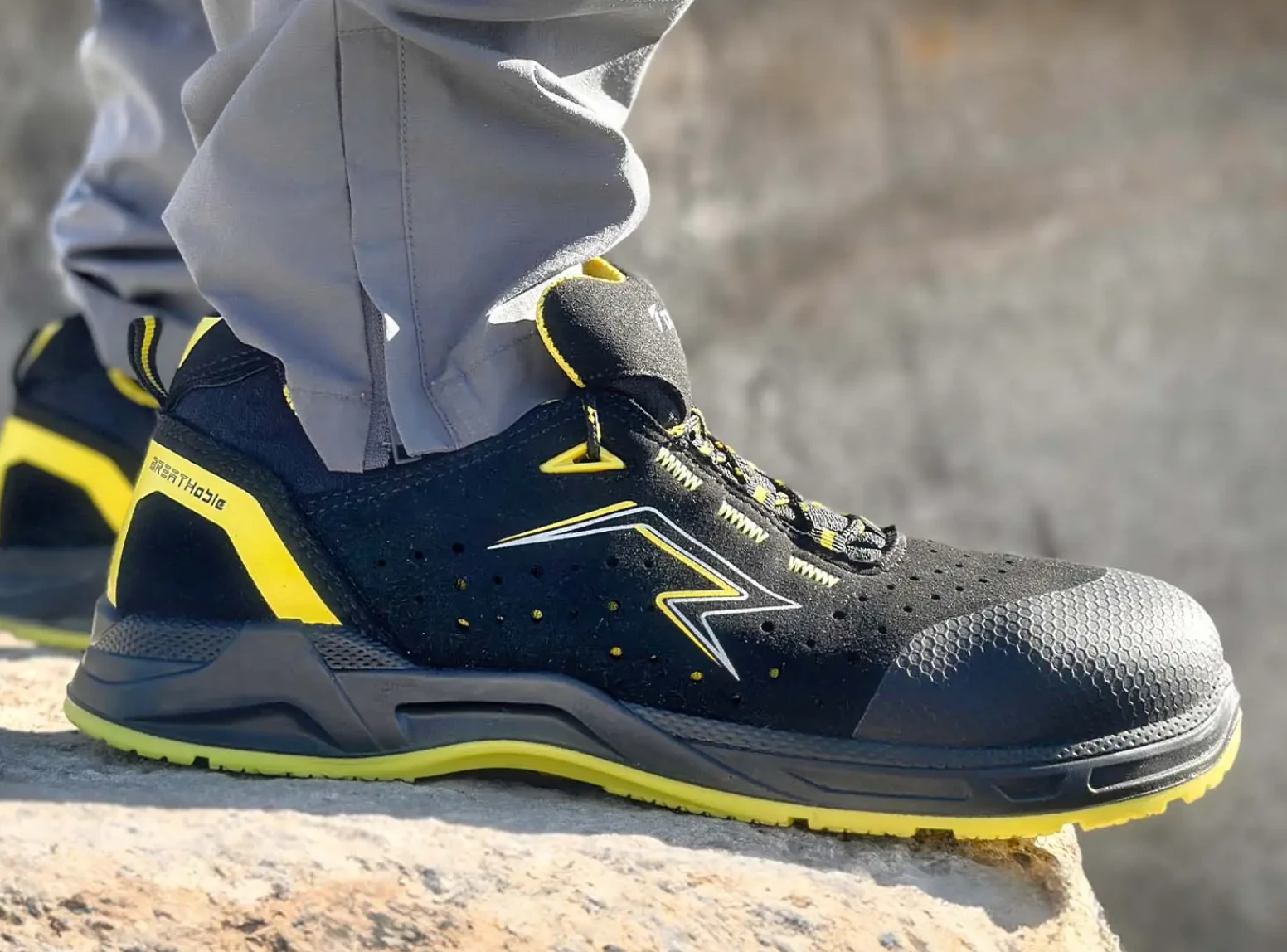
In the Gulf Cooperation Council (GCC) countries, including the UAE, requirements for personal protective equipment are established through companies’ internal regulations, in accordance with all international standards. For an HSE specialist, the choice of safety footwear is determined not by brand, but by compliance with identified workplace risks: impact and compression loads, sole punctures, thermal exposure, and contact with corrosive substances, including petroleum products.
In this case, the primary selection criterion is the EN ISO 20345:2011 standard, which has served as the benchmark for the level of protection in work footwear since 2013. It specifies the minimum physical and technical parameters that footwear must meet. But the problem lies elsewhere: most professionals see the labeling but do not always understand exactly what it is supposed to guarantee them.
Classification of safety levels for work shoes
The SB (Safety Basic) level covers the essentials: a protective liner capable of withstanding an impact of 200 J and compression of up to 1,100 N. What does this mean in practice? It means a load weighing up to 20 kg falling from a height of 1 meter. Such scenarios are quite common on construction sites. Beyond that, the classification and additional features begin:
- S1P. Antistatic properties, energy absorption in the heel area, resistance to fuels and oils, and puncture protection.
- S2. Features an additional water-repellent outer layer while retaining the core properties of S1P.
- S3. Puncture protection, textured sole, and water-repellent upper.
- S4/S5. Polymer footwear (rubber or PU) with full waterproofing; the S5 version additionally features puncture protection and a treaded sole.
It is important to understand that, under UAE regulatory requirements, the labeling refers to a fixed set of verifiable protective characteristics confirmed by testing in accordance with EN ISO 20345.
At this stage, many buyers often make a critical mistake. They select work shoes based solely on their classification, ignoring the design. That is why true professionals choose the suppliers of TALAN safety shoes in the UAE, where equal attention is paid to both compliance with standards and engineering design.
Comparative Technical Analysis
Let’s examine the design parameters that directly affect the service life, safety, and performance of safety footwear during use.
Upper materials
Genuine leather with a thickness of 2.0–2.2 mm (as used in TALAN) is significantly more resistant to breaking than budget options measuring 1.4–1.6 mm. The physics are simple:
- The increased material thickness ensures a longer service life during repeated bending cycles.
- Greater moisture absorption helps effectively wick away moisture and reduces foot overheating during use in high-temperature conditions.
Thin leather cracks more quickly at the creases in the toe area, which compromises its protective properties.
Sole: dual-density PU/PU
Double Density technology is an engineering-based solution that distributes functional loads within the sole:
- The outer layer is made of a stiffer polyurethane and provides wear resistance and resistance to abrasion.
- The inner layer has a lower density and provides cushioning, reducing the impact on the musculoskeletal system.
A single-density sole cannot effectively absorb impact energy while maintaining a high level of wear resistance, which directly affects its service life and comfort.
Protective components
- Steel soleplate. It is highly durable, but heavier and more conductive.
- Composite/Kevlar. Significantly lighter, does not conduct heat, and is non-magnetic.
A Kevlar insole is particularly suitable for S3-rated work boots. It provides puncture protection without compromising flexibility.
Specifics of Safety Footwear Use in the UAE
Operating at +40°C is a unique engineering challenge. The main risks are:
- Overheating of the feet. Impaired thermoregulation due to prolonged exposure to high temperatures.
- Accelerated material degradation. Degradation of polymers and leather due to exposure to heat and UV radiation.
- Increased microbial activity. High humidity creates conditions conducive to the growth of bacteria and mold.
Features of TALAN safety footwear:
- Breathable linings without adhesive barriers.
- Naturally breathable leather.
- Anatomically contoured insoles with moisture-wicking properties.
A separate category consists of facilities equipped with metal detectors. In this context, non-metallic footwear is essential. Composite toe caps and Kevlar are no longer optional—they are a requirement.
Comparison Table of Work Shoe Specifications in the UAE
Specifications | TALAN Standard | A typical budget brand | Why is this important? |
Leather thickness | 2.0-2.2 мм | 1.4-1.6 мм | Tear resistance and durability under bending |
Sole | Dual density PU/PU | Bulk density | Shock absorption + durability |
Tray | Certified (200 J) | It is often stated formally | Real protection against injuries |
Lining | Breathable materials | Synthetic fabric with adhesive | Temperature and Hygiene Control |
How to Choose the Right Safety Footwear
In the UAE, where safety requirements and the climate place additional demands on work footwear, it is important to choose proven solutions with verified specifications. TALAN safety footwear combines certified protection, thoughtful design, and materials built to withstand heavy-duty use. If necessary, you can purchase them directly from official suppliers or through the company’s website, ensuring you receive a product that meets the stated standards without compromise.

