

Wireless charging used to be defined by one main promise: less cable hassle. That promise still matters, but it no longer explains why the experience feels different today. For many users, the bigger change is not simply that charging is wireless. It is that charging feels more exact, more reliable, and less dependent on small adjustments.
That shift reflects a change in expectations. People no longer judge wireless charging only by whether it works in theory. They pay closer attention to whether it works smoothly in daily life. A charging experience can be convenient on paper and still feel clumsy in practice if it requires too much repositioning, too much checking, or too much guesswork. What users increasingly want is not just cable-free power. They want confidence that the phone is in the right place and the charging process is behaving the way it should. That is what makes modern wireless charging feel more precise than before.
The Early Convenience of Wireless Charging Had Limits
Earlier wireless charging appealed to users because it removed the repeated act of plugging in and unplugging. That alone made it feel cleaner and simpler than wired charging in many everyday situations. But the experience often came with a quiet compromise. A phone could be placed on the pad, yet users still felt the need to double-check whether it was sitting correctly.
That uncertainty mattered more than it seemed. In everyday life, people do not want charging to become a small task that requires monitoring. They want to set the phone down and move on. When charging depends on subtle placement differences, the process still carries a little friction. It may be less visible than cable clutter, but it is friction all the same.
Why Placement Has Become a Bigger Part of the Experience
One reason wireless charging now feels more precise is that people have started to notice how much placement affects comfort. Charging is no longer just about power transfer. It is also about what the first second of use feels like. Does the phone land naturally, or does it need adjustment? Does the user trust the connection immediately, or do they glance back to confirm?
These are small moments, but they shape the overall impression of a product. In a bedroom, on a desk, or on a kitchen counter, people want charging to fit into a routine without asking for extra attention. The more often a device is handled throughout the day, the more important those tiny points of interaction become. Precision, in that sense, is not only technical. It is behavioral. It comes from reducing uncertainty at the exact moment charging begins.
Better Alignment Changed More Than Speed
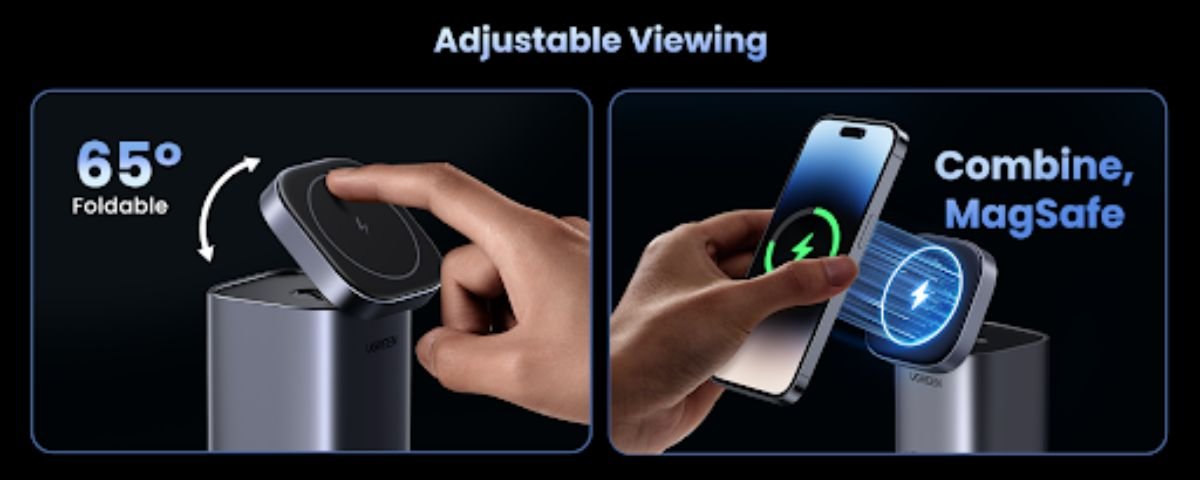
The Wireless Power Consortium says Qi2 devices use magnetic attachment technology to align devices and chargers, with the goal of improving energy efficiency, charging speed, and ease of use. The same official materials note that the original Qi2 standard brought 15W charging, while later Qi2 25W expanded that foundation to higher power.
What matters for users is what that means in practice. Better alignment changes the feel of charging before it changes anything else. It reduces the sense that wireless charging is a soft estimate of where a phone should go. Instead, the action becomes more deliberate and more predictable. A technology improvement may be measured in watts or efficiency, but the everyday effect is often psychological. People feel less need to correct, test, or second-guess the setup.
That is one reason a Wireless Phone Charger now feels like a more mature accessory than it did a few years ago. The product category is moving away from the idea of wireless charging as merely convenient and toward the idea of it being dependable enough to become part of normal daily placement habits.
Precision Matters More in Small Repeated Moments
The improvement is especially noticeable in ordinary spaces rather than dramatic ones. It shows up on the nightstand, where a user wants to put the phone down in low light and trust that it is charging. It shows up on a desk, where the phone may be set down and picked up repeatedly between tasks. It shows up in a shared room, where the user values a setup that feels neat, intuitive, and easy to repeat.
These are not high-stakes moments, but they are frequent ones. And frequency changes what people value. A charging method that saves only a few seconds or avoids only a small annoyance can still feel significantly better when the action happens again and again over weeks and months. Precision becomes meaningful because it removes the need for tiny corrections that used to feel normal.
Why Standards Now Shape User Expectations More Directly
Another reason the experience feels more precise is that standardization is becoming easier for users to notice. The Wireless Power Consortium describes Qi2 as a certification-driven standard focused on safety and interoperability, and its product database exists to verify certified devices.
That matters because users increasingly expect wireless charging to behave less like a nice extra and more like a stable everyday utility. The phrase Qi2 wireless charging carries weight not because consumers want to memorize technical language, but because they have learned to value chargers that feel more consistent across brands and accessories. When the market moves toward better alignment and clearer certification, the result is not just a more advanced standard. It is a calmer everyday experience.
Precision Is Really About Trust
In the end, precision in wireless charging is about trust more than novelty. People want to feel that where they place the phone is where it should be. They want the start of charging to feel obvious rather than approximate. They want the process to fade into the background instead of asking for repeated confirmation.
That is why wireless charging now feels more precise than before. The category has moved beyond the simple appeal of eliminating cables. It is becoming better at guiding placement, reducing uncertainty, and supporting routines in a way that feels more intentional. For users, that kind of precision does not only improve performance. It makes the whole experience easier to live with.

